Asbestos containing materials (ACMs) are classified into one of two categories – “friable” or “non-friable” asbestos.
Whilst all types of asbestos are dangerous, some types pose a greater risk and can only be handled by licenced professionals.
What is Friable Asbestos?
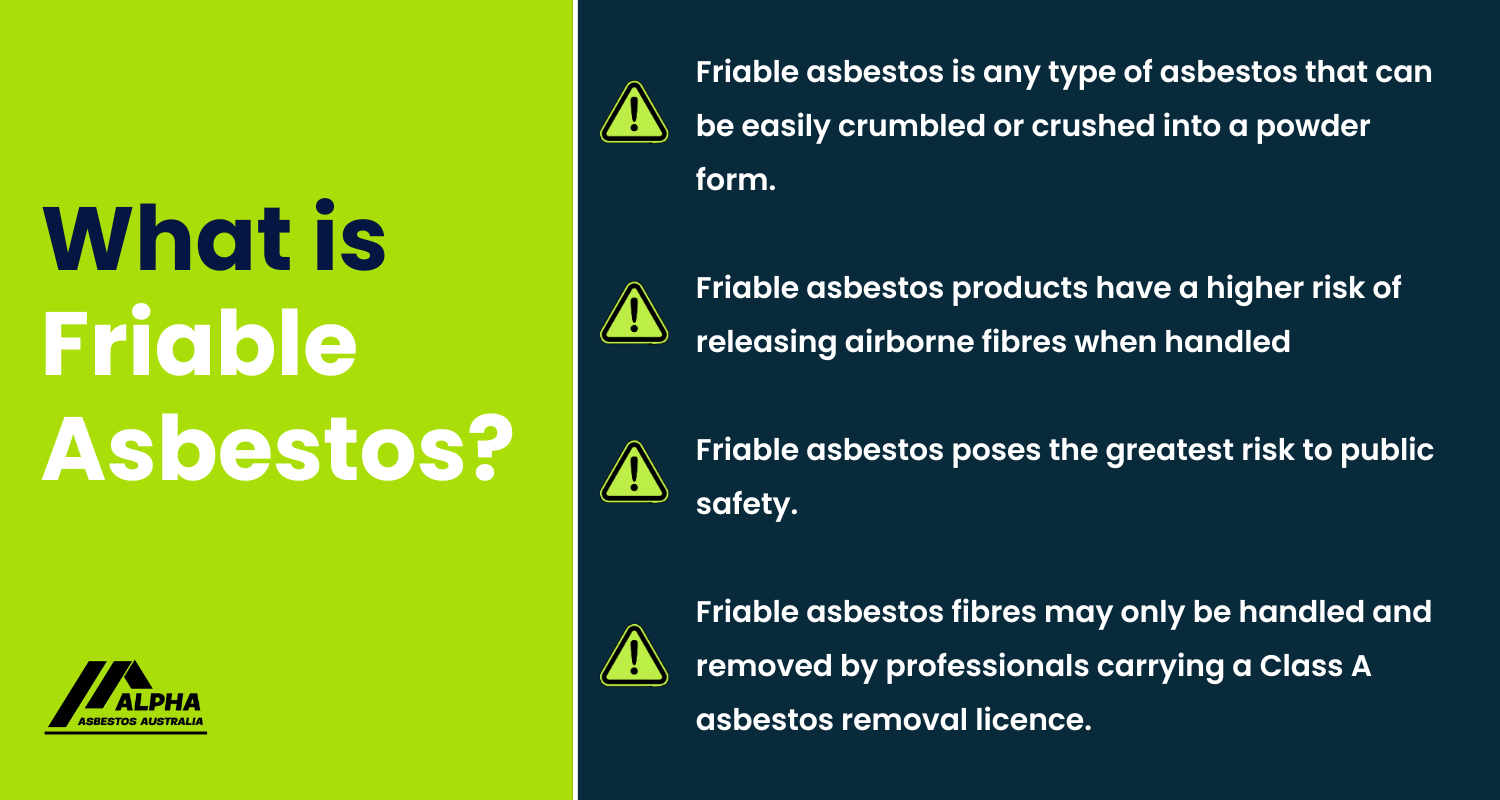
Friable asbestos is any type of asbestos that can be easily crumbled or crushed into a powder form.
Friable asbestos materials may contain up to 100% asbestos and pose the greatest risk to public safety. Friable asbestos products can be easily crumbled into a fine material or dust and have a higher risk of releasing airborne fibres when handled.
In Australia, friable asbestos materials may only be handled and removed by an asbestos removal professional carrying a Class A asbestos removal licence.
Where is Friable Asbestos Usually Found?
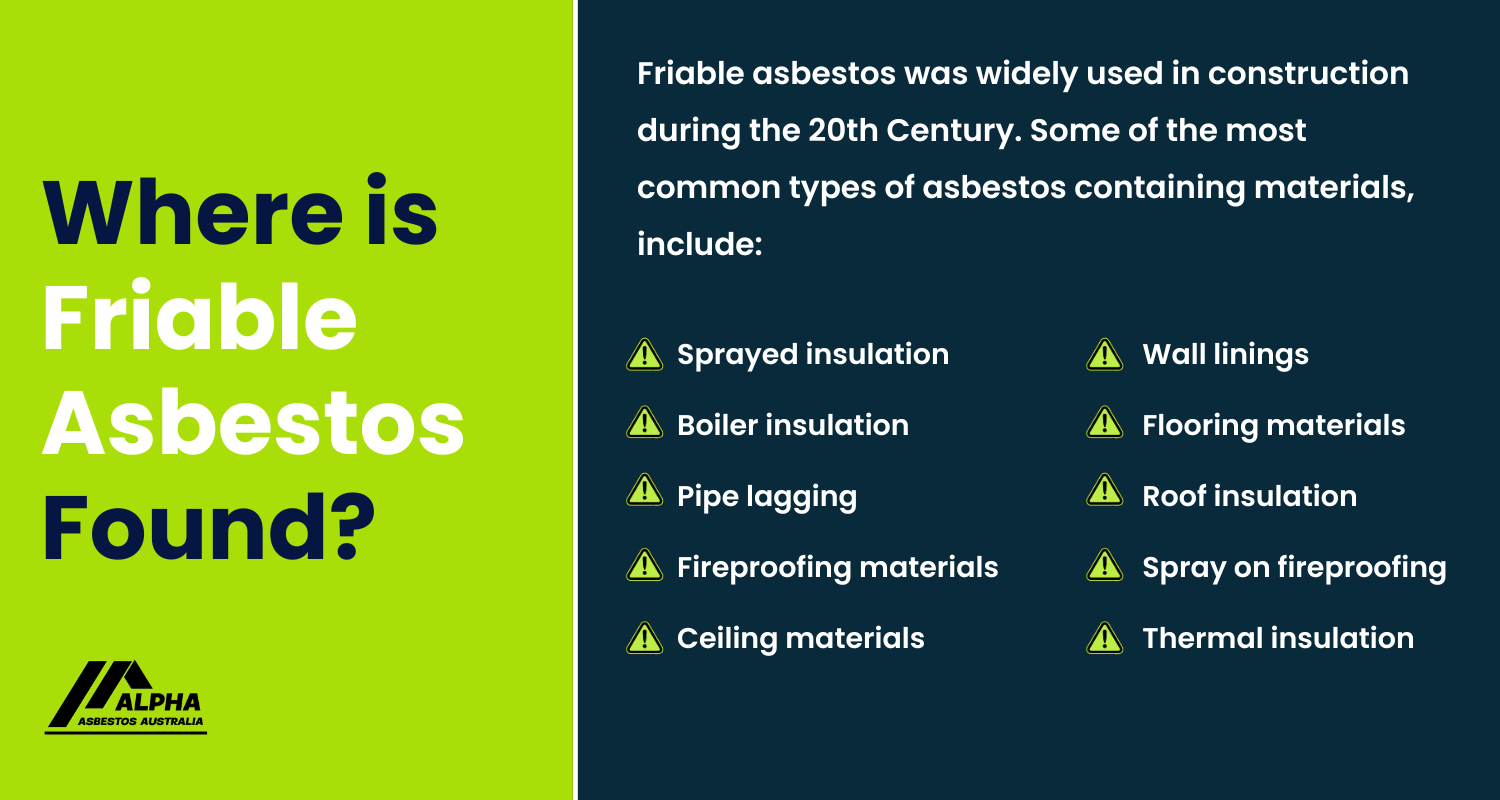
Friable asbestos products were widely used in the construction of commercial and residential properties in Australia through the 20th Century and right up until it was banned in 2003.
Some of the most common types of asbestos containing materials, include:
Sprayed insulation
Boiler insulation
Pipe lagging
Fireproofing materials
Ceilings – including “popcorn” ceilings
Wall linings
Flooring – including vinyl flooring
Roof insulation (AKA: Mr Fluffy)
Spray on fireproofing
Thermal insulation
Can Non-Friable Asbestos Become Friable?
Yes, non-friable asbestos materials may become friable over time due to natural deterioration, chemical exposure, or exposure to extreme weather including hail damage.
Whilst Non-friable asbestos materials typically start life as a bonded material that is mixed with cement or resin, they may still become friable when disturbed.
Examples of non-friable asbestos materials that may become friable, include:
Cement sheeting that included an asbestos bonding agent that has been crushed
Cement sheeting that has been left outside and exposed to the elements to deteriorate
Vinyl floor tiles that have been sanded or exposed to harsh abrasives
Roof tiles that have been broken, cracked, and exposed to extreme weather
Materials containing non-friable asbestos that are broken, burned, or subject to high impact
Dangers of Friable Asbestos Exposure
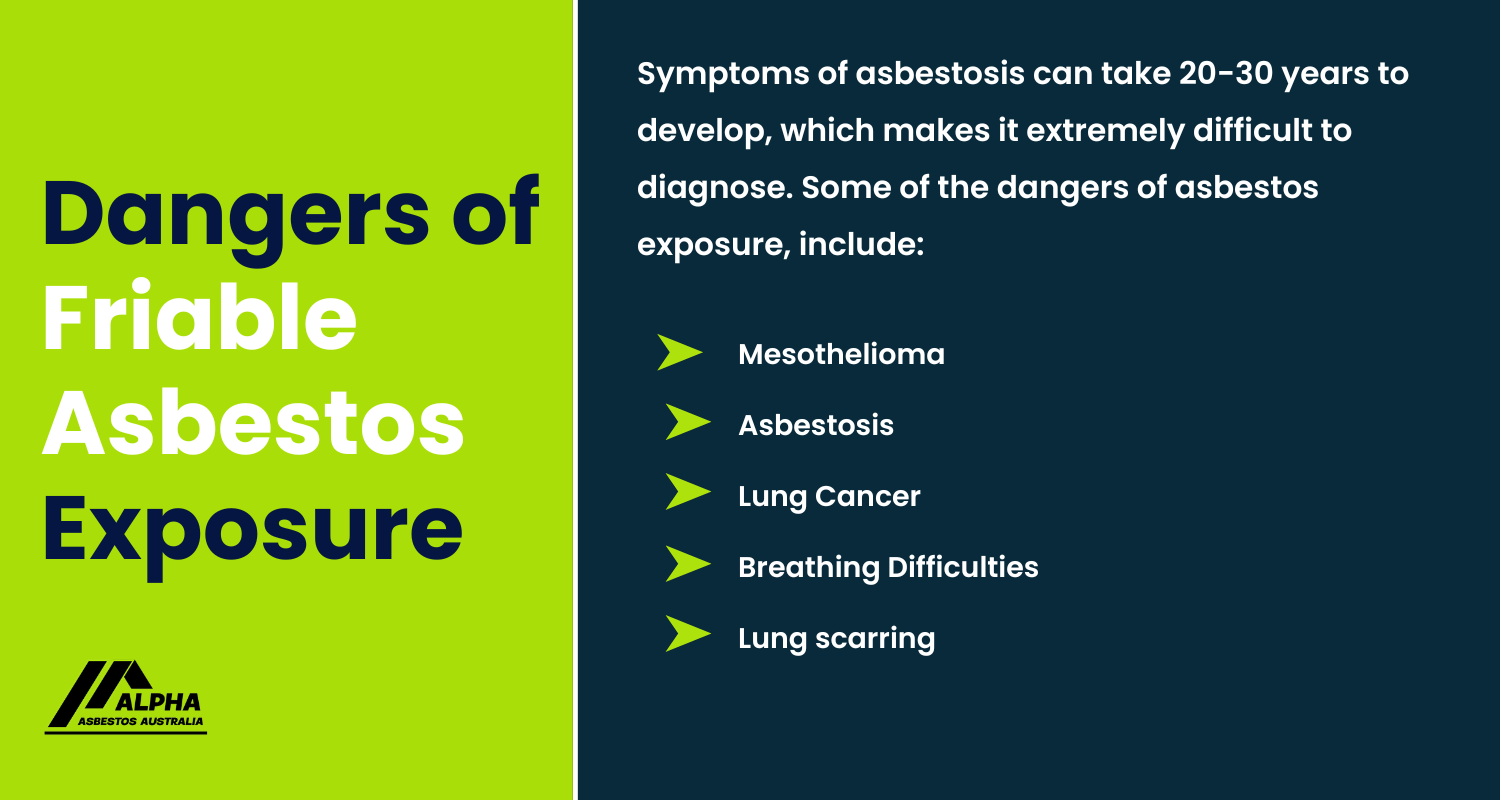
Breathing in asbestos fibres can causes asbestosis, lung cancer and mesothelioma. Symptoms of asbestosis can take 20-30 years to develop, as the lunch scarring develop slowly. The significant delay between exposure and symptoms makes it extremely difficult to diagnose asbestosis.